
resources-impakt, citiesabc, first_page
AgriConnect: An Initiative By The World Bank to Empower Smallholder Farming
20 Apr 2026

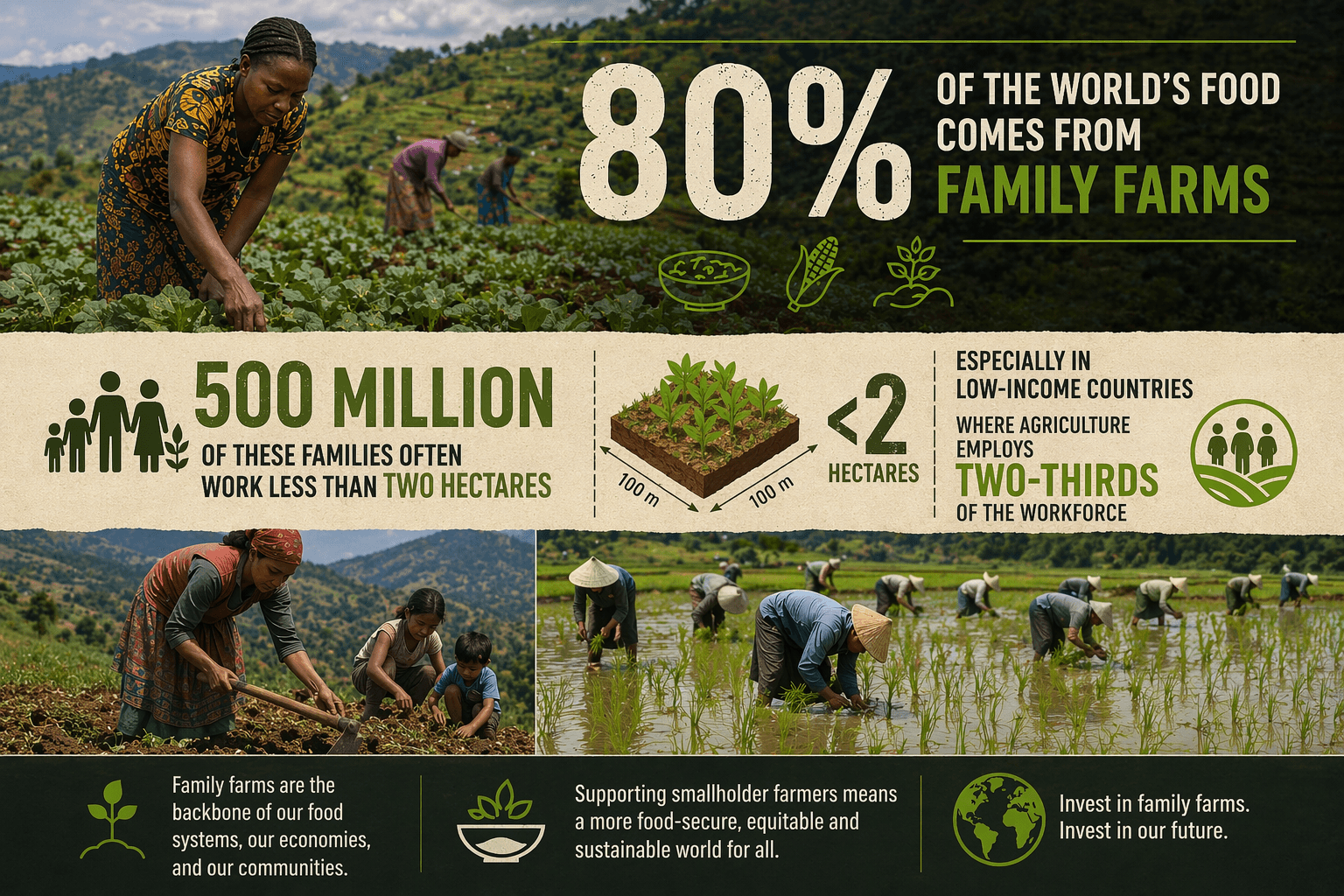
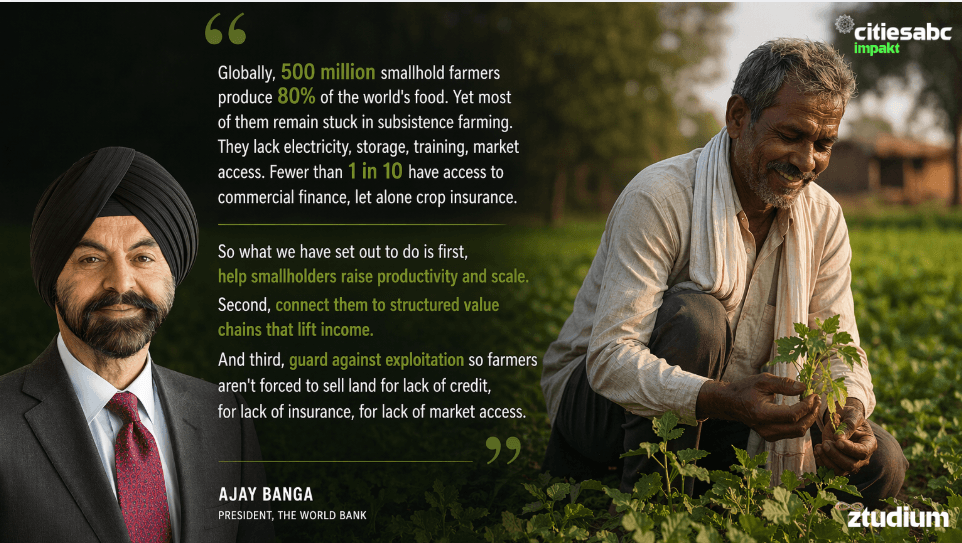
80% of the world’s food comes from family farms. However, 500 million of these families often work less than two hectares, especially in low-income countries where agriculture employs two-thirds of the workforce.
They face brutal barriers: poor access to markets, credit, and technology; climate shocks like floods and droughts; and supply chain disruptions from conflicts and pandemics. The result? Persistent poverty, food insecurity, and missed opportunities for youth employment as 1.2 billion young people enter the workforce by 2030.
Further, the global food demand will surge 30-60% by 2050 to feed 10 billion, amid rising greenhouse emissions (one-third from food systems) and deforestation (70% linked to agriculture). In regions like Africa, Latin America, and South Asia, smallholders bear the brunt: unpredictable harvests, high post-harvest losses, and exclusion from value chains. Women farmers, who sustain households but lack financing and training, amplify the inefficiency. Without intervention, agriculture risks becoming a poverty trap rather than an economic engine.
AgriConnect: An Initiative By The World Bank to Empower Smallholder Farming
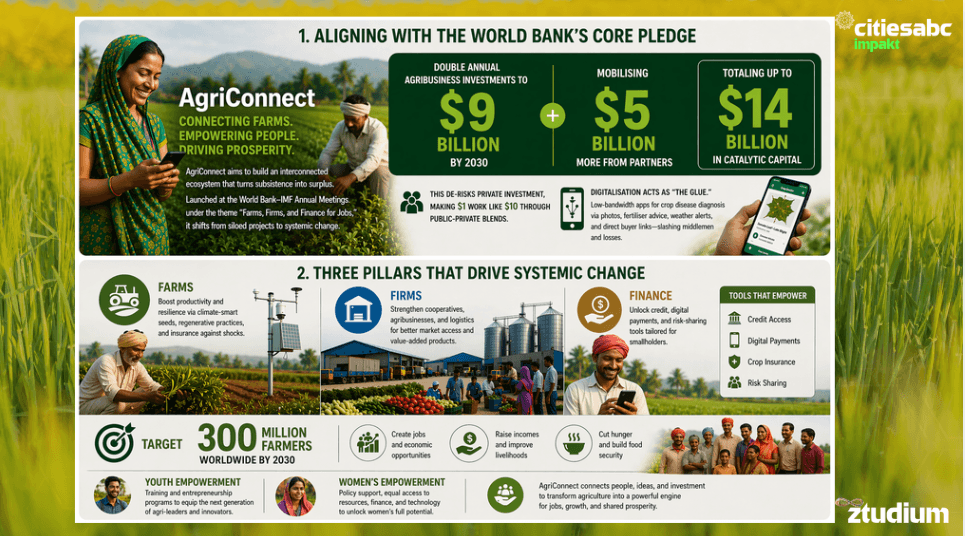
AgriConnect aims to build an interconnected ecosystem that turns subsistence into surplus. Launched at the World Bank–IMF Annual Meetings under the theme "Farms, Firms, and Finance for Jobs," it shifts from siloed projects to systemic change.
AgriConnect initiative aligns with The World Bank’s core pledge: double annual agribusiness investments to $9 billion by 2030, mobilising $5 billion more from partners—totaling up to $14 billion in catalytic capital.
This de-risks private investment, making $1 work like $10 through public-private blends. Digitalisation acts as "the glue," with low-bandwidth apps for crop disease diagnosis via photos, fertiliser advice, weather alerts, and direct buyer links—slashing middlemen and losses.
Three pillars anchor the approach:
- Farms: Boost productivity and resilience via climate-smart seeds, regenerative practices, and insurance against shocks.
- Firms: Strengthen cooperatives, agribusinesses, and logistics for better market access and value-added products.
- Finance: Unlock credit, digital payments, and risk-sharing tools tailored for smallholders.
Targets include 300 million farmers worldwide by 2030, creating jobs, raising incomes, and cutting hunger. It also emphasises youth training in entrepreneurship and women’s empowerment through policy tweaks and tech access.
Country Rollouts
AgriConnect scales through "country compacts"—tailored partnerships activating local solutions. Senegal led as the first in February 2026, targeting grains, horticulture, and livestock with infrastructure and digital tools.
Brazil’s AgriConnect Brasil, launched at IICA headquarters in Brasília, eyes 1 million family farms (75% of rural properties) by 2030, partnering for rural connectivity and market integration.
Other hotspots show adaptability:
- Pakistan: Climate-resilient exports amid intensifying monsoons and floods.
- Ukraine: $55 billion rebuilding, restoring war-torn lands into innovation hubs with secure ports.
- Guinea: Redirects mining revenues to "last-mile" infrastructure for small farmers.
- Southern Africa: CCARDESA aligns research across 16 SADC states for cross-border markets and youth jobs.
At the Spring Meetings 2026 (April 13-18, Washington D.C.), a session scaled agritech from millions to hundreds of millions of users, highlighting successes like 4.61 million beneficiaries reached via partners.
Strategic Partners Driving Scale
AgriConnect unites the full World Bank Group—World Bank (policy finance), IFC (private sector), MIGA (insurance)—with multilaterals like IFAD (pledging 70 million farmers), AfDB, IDB, FAO, and IICA. Private innovators provide tech; governments revamp policies; cooperatives amplify voices.
In Latin America, IDB, IFAD, FAO, and ALASA co-invest in risk management. Southern Africa taps GIZ, EU, and Germany’s BMUV.
Impact Metrics and the Road Ahead
Early numbers inspire: 97,000 farmers trained, 41,300 lead farmers supported, 3,720 value chain actors accessing climate-smart agriculture. Yet challenges loom—institutional gaps, connectivity deserts, policy silos. Success hinges on local adaptation: Pakistan’s flood-proof crops, Ukraine’s port security, Guinea’s infra pivot.
By valuing regenerative practices and unique local products, AgriConnect counters market biases favoring industrial giants. It positions agriculture as civilisation’s "beating heart," underappreciated yet foundational—without sustainable food, no cities, no tech booms.
As Ajay Banga urges,
"Steal shamelessly and share seamlessly."
With fiscal stresses from climate and geopolitics mounting, AgriConnect’s timing is urgent. If it delivers, 300 million farmers won’t just survive—they’ll thrive, powering job-rich economies and a resilient planet.


